Integration of Al in automation:
From challenge to real business value

Introduction

Automation today is no longer just a bunch of scripts and ad-hoc bots that do something in the background, but only according to strictly defined rules... Today it is a real orchestration of technologies - AI, LLMs, process/task mining, BPM, low-code platforms - all working together to bring real value and control risk. Gartner calls this combination "hyperautomation" – sounds complicated, but basically it means: multiple tools, one goal, end-to-end process.

Forrester predicts that in the next couple of years the wave of automation will be led by LLMs and AL agents, and that we will no longer have sporadic pilot projects but real, end-to-end initiatives. And GenAl? If you smartly redirect people to higher-value tasks, productivity can increase significantly – within the first year. It is clear that this kind of investment is very worthwhile.

The point of this document is simple: the goal is not just to accumulate bots that do small tasks. Real value comes when you focus on four key things:
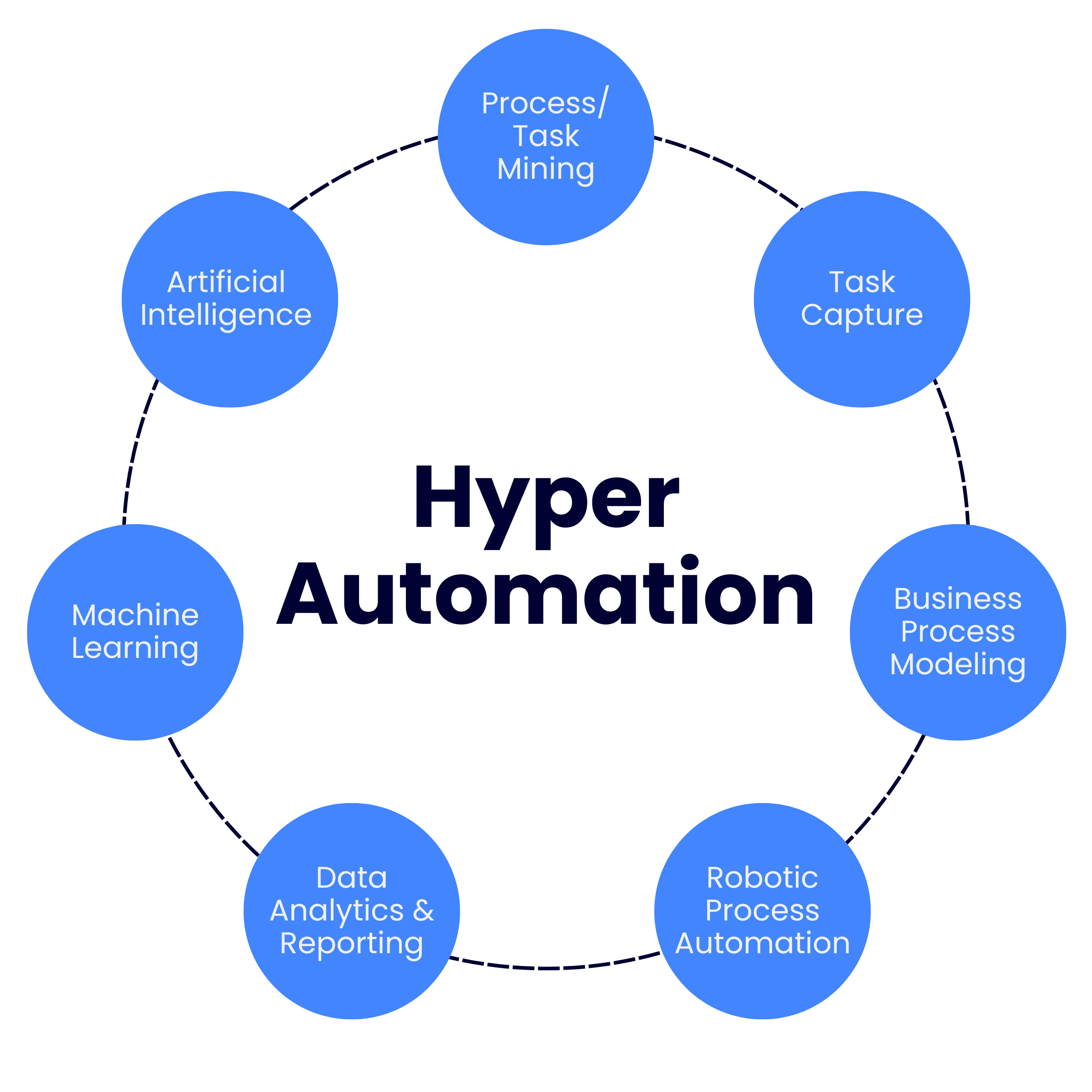
  1. Visibility of the process (process/task mining), to know where the real bottlenecks are.
  2. Choosing smartly where automation will really make a difference ("business value first").
  3. Design workflows where humans and AI work hand in hand – we call them "agentic" workflows.
  4. Effective management of risks and changes, so that the entire system remains stable and predictable.
Hyper Automation blog

Why are companies still "missing out" on value?

If you look at it in practice:

  • Automated tasks exist, but no one sees the entire end-to-end flow – so bottlenecks go unnoticed.
  • Bots fix minor bugs, while 20% critical variations are still done manually.
  • The AI pilot exists, but no one really measures how much impact it has on process, quality, and cash flow.

Data from the industry says the same: genAI is growing, the benefits are there, but the "high performers" are leading the way - those who not only introduce AI, but combine it with data, good risk control and changing the way of working.

Three layers of automation
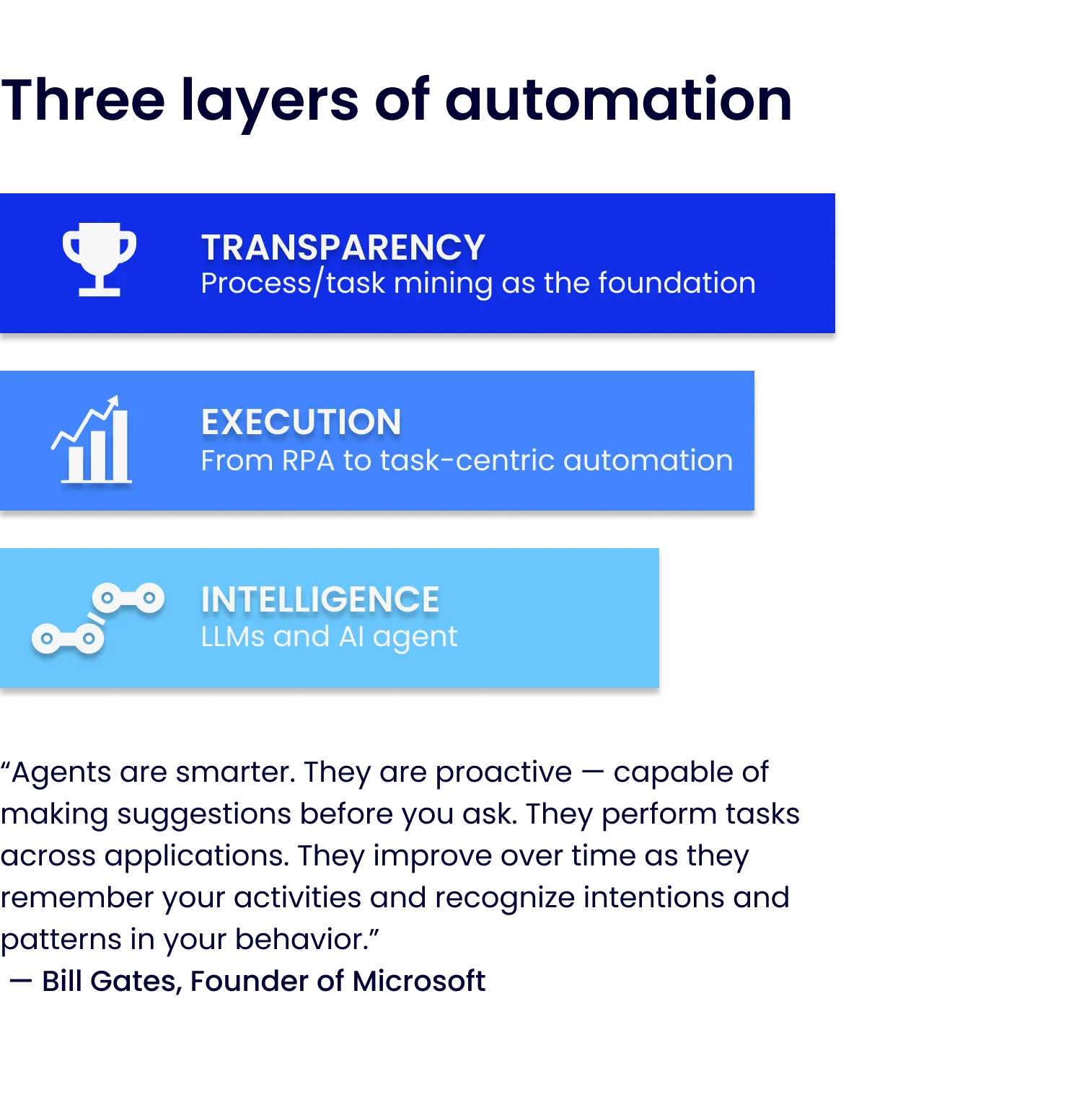
  1. Transparency - process/task mining as a basis
    Without clear logs and controls, automation is guesswork. Process/task mining extracts real flows from ERP, CRM and other systems, shows variations and measures bottlenecks. In practice, it is often the first "aha-moment" when you realize that a process you thought was simple, is not at all.
  2. Execution - from RPA to task-centric automation
    It's no longer just about RPA typing data into a system. Task-centric automation focuses on the stability and management of task automation, but also on flexible integration and orchestration. In short, the bot works smarter, not harder.
  3. Intelligence – LLM and AI Agents
    Now comes the fun part. AI agents can read emails, PDFs, attached documents, suggest the next step and work together with humans. We can already see that this is the future – agents instead of just working, they actually understand the process and help people be faster and more accurate.
Three layers blog

Where does AI really make a difference and how do we measure it?

Biggest Impact - Customer Support, Sales/Marketing, Software Engineering and R&D. Approximately 75% of genAI values come from these areas.

How do we measure?

  • Cycle Time: how much faster you are after automation.
  • Right-First-Time: how many requests go through the process without errors.
  • Cost-to-Serve: real savings in time and money.
  • Time to Value: how quickly you see an effect in KPIs.

Operational blueprint in 5 steps

  1. Discovery based on real data – process/task mining on a couple of key processes.
  2. End-to-end flow design (BPMN + rules + exceptions) – stabilize, optimize, then automate.
  3. "Agentic" layer – AI agents where data is unstructured and where logic is required.
  4. Orchestration and governance – without this, chaos quickly ensues.
  5. Measurement and spread – only cases with proven ROI go further.

Conclusion

The true value of automation lies not in a bunch of bots, but in a smart orchestration of people, Al agents, and clear rules. When you measure results, learn from data, and continuously improve workflows, automation stops being an experiment and becomes a real driver of productivity and business value. Basically, the winners will be those who know how to combine technology and people in the right way.

Author:

Tamara's blog

Tamara Svorcan

Lead Business Analyst

Search all...