
Artificial intelligence (AI) is everywhere today. Companies all over the world want to introduce it, show that they are innovative, and gain an advantage in the market. AI agents, intelligent automation, chatbots, predictive models — everything sounds tempting. But one question is often skipped over: where exactly can AI help?
Here we come to the point: without a clear understanding of business processes, there is no meaningful AI solution.
One of the most common mistakes companies make is looking first what can AI do, instead of starting from what do they need. The implementation of AI should not be just a matter of prestige or "hype". To justify the investment, AI must solve a specific problem, improve efficiency, or deliver a measurable result.
And so that you know What problem is worth solving?, first you need to know how is your organization doing in general?.
Processes are what drive any organization — sales, customer support, procurement, logistics, HR. If you don't know what those processes look like, where their bottlenecks are, where mistakes are made, where time is wasted, you can't even know where AI would make sense.
That's why the first step in any serious AI initiative is actually process mapping and understanding. Without it, AI is reduced to mere experimentation.
When companies have their processes documented, mapped and optimized, then they can clearly see where automation or AI would bring real value. Maybe it's the classification of emails in customer support. Maybe it's predictive ordering of goods. It may be processing a refund request.
The point is that AI doesn't search randomly, but it comes from understanding the needs of the process.
Another key reason why processes come first: return on investment.
An AI solution, however technically interesting, has to pay for itself. It must save time, reduce costs, increase quality or enable something that would not be possible without it. That's it business case. And it doesn't come from PowerPoint presentations about the capabilities of AI — it comes from real processes.
Another important aspect: the success of AI solutions depends directly on data quality and structure. And where is that data generated? In processes.
If processes are chaotic, if there is no standardization, if information is collected manually and there is no consistent practice — the data is unlikely to be usable for any serious AI solution.
In other words: good processes mean good data. And good data means a chance for good AI.
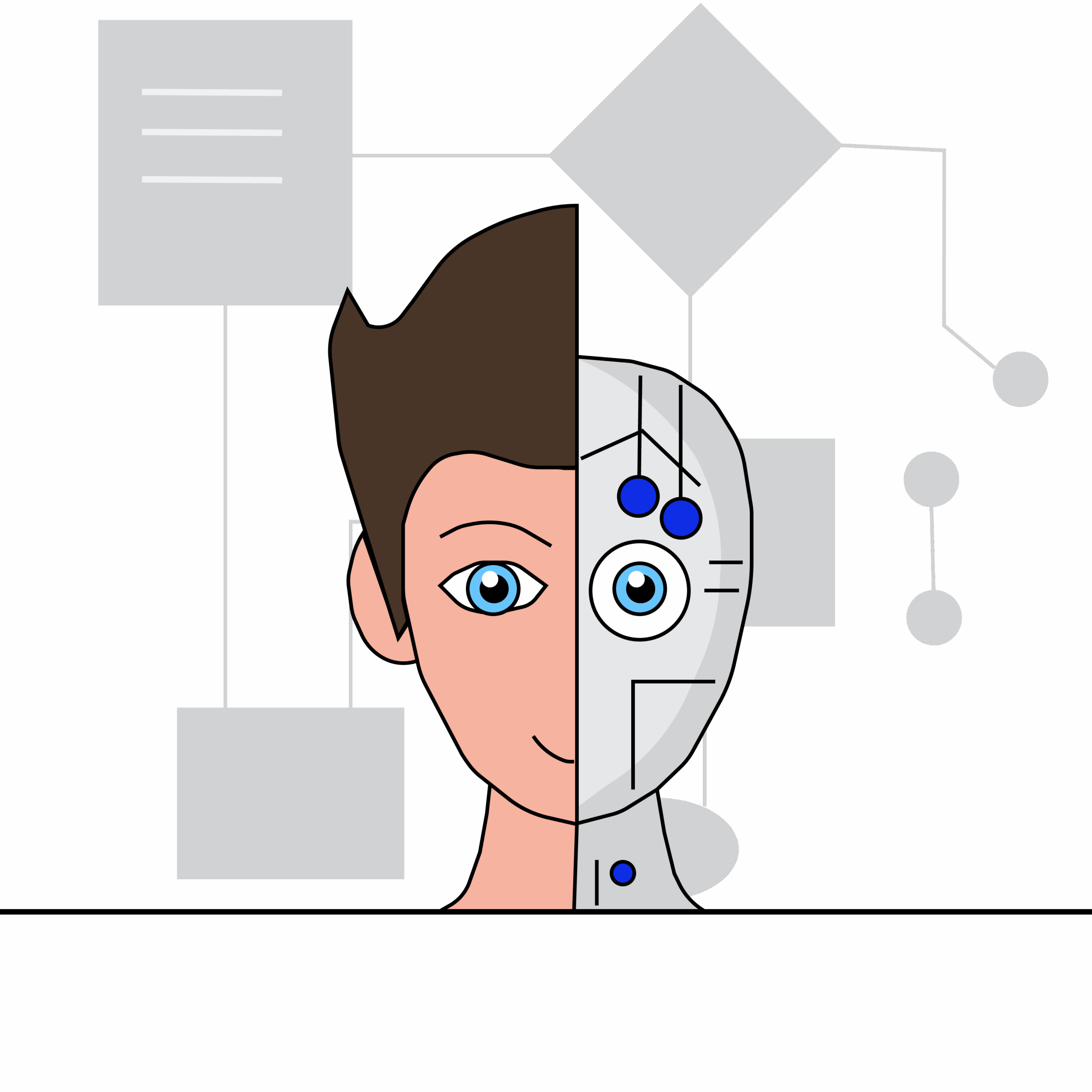
AI is not a magic solution that will fix a poorly organized business. On the contrary — without a good understanding of the process, AI can only further complicate things. It can make more mistakes automatically. May require manual checks. It can make decisions that don't make sense because they were trained on bad data.
So, before you even think about artificial intelligence, ask yourself: how well do we know our processes?
If you don't have a clear answer to that question, the AI can wait.
(c) 2025 Simplify. All Rights Reserved | Privacy Policy | Terms of Use
